
Hands-On Learning in Primary & Middle School Science: Building Curious Minds Through Practical Experiences
Science is much more than reading textbooks or memorizing definitions. The real excitement begins when children explore, observe, question, and discover concepts with their own hands. Hands-On Learning in Science has become one of the most effective teaching approaches for primary and middle school students because it transforms theoretical knowledge into meaningful real-life experiences.
At Delhi World Public School Kalyani (DWPS Kalyani), we believe that every child learns best by doing. Our science curriculum combines classroom instruction with engaging experiments, STEM activities, project-based learning, and interactive demonstrations that encourage students to become active learners rather than passive listeners.
What is Hands-On Learning in Science?
Hands-On Learning in Science is an educational approach where students actively participate in experiments, observations, model-making, investigations, and practical activities. Instead of simply reading about scientific concepts, children experience them directly through exploration and experimentation.
Whether students are building a simple electric circuit, growing plants, observing insects, or creating a working model of the solar system, practical experiences help them understand scientific principles in an enjoyable and memorable way.
Why is Hands-On Learning Important?
Young learners are naturally curious. Practical science activities encourage them to ask questions, test ideas, and think critically.
Some major benefits include:
- Improves conceptual understanding
- Develops logical and analytical thinking
- Encourages creativity and innovation
- Strengthens observation skills
- Builds confidence in solving problems
- Enhances teamwork and communication
- Makes learning enjoyable and engaging
- Promotes lifelong curiosity about science
Students remember concepts far better when they perform experiments themselves rather than simply reading about them.
Hands-On Science Activities for Primary Students
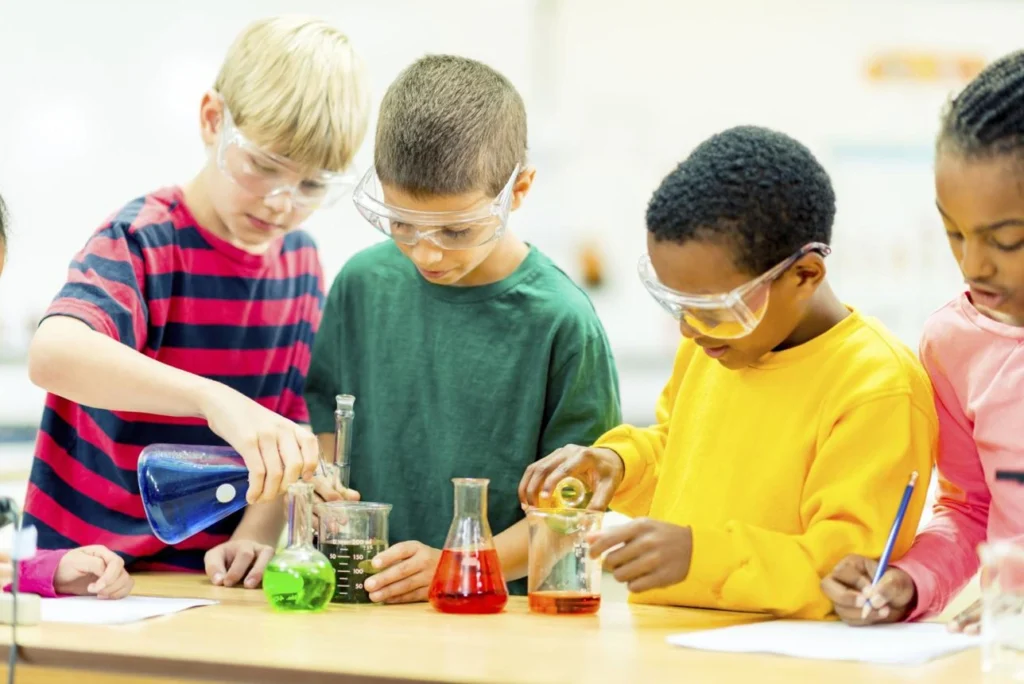
Primary school students learn best through simple and exciting activities that introduce basic scientific concepts.
Popular classroom activities include:
- Seed germination experiments
- Water cycle demonstrations
- Floating and sinking experiments
- Magnet exploration
- Rainbow formation
- Nature observation walks
- Balloon-powered cars
- Paper bridge engineering challenges
These activities help children connect science with everyday life.
Hands-On Science Activities for Middle School Students
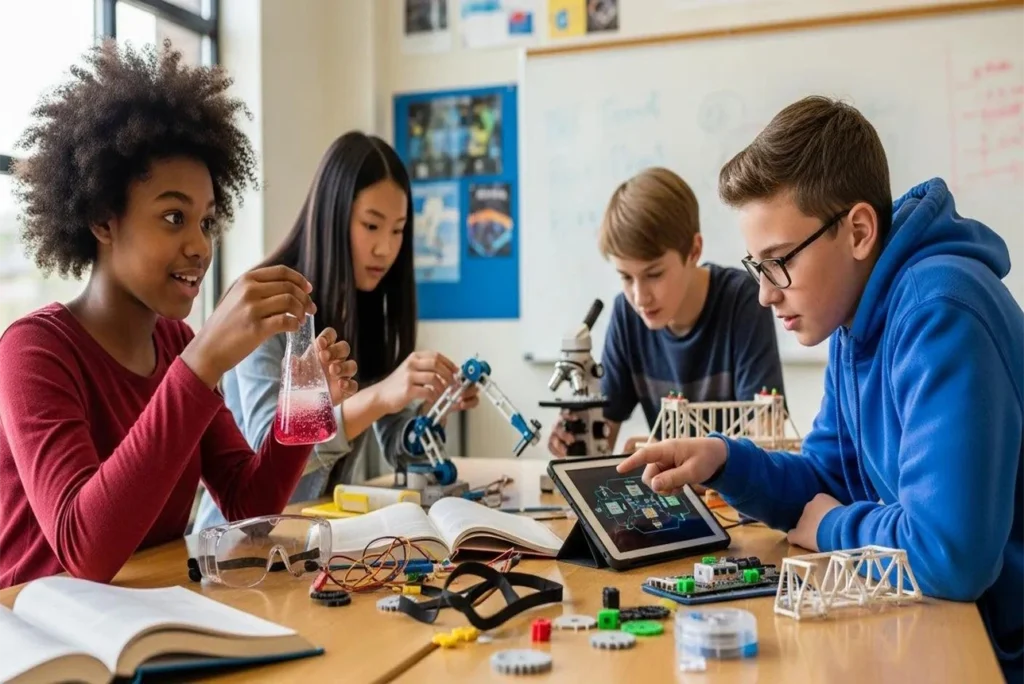
As students grow older, they are encouraged to investigate more complex scientific ideas.
Examples include:
- Building electric circuits
- Acid and base experiments
- Microscope observations
- Water filtration models
- Renewable energy projects
- Robotics and STEM challenges
- Weather monitoring
- Human body system models
- Environmental science investigations
These activities develop independent thinking while preparing students for higher-level scientific learning.
How Hands-On Learning Develops Essential Life Skills
Science practicals teach far more than scientific facts. Students also learn valuable life skills that support their future success.
Hands-on learning helps children develop:
- Critical thinking
- Decision-making
- Creativity
- Collaboration
- Leadership
- Communication
- Time management
- Observation
- Scientific reasoning
- Problem-solving
These skills remain useful throughout their academic journey and professional careers.
The Role of Teachers in Hands-On Science Learning
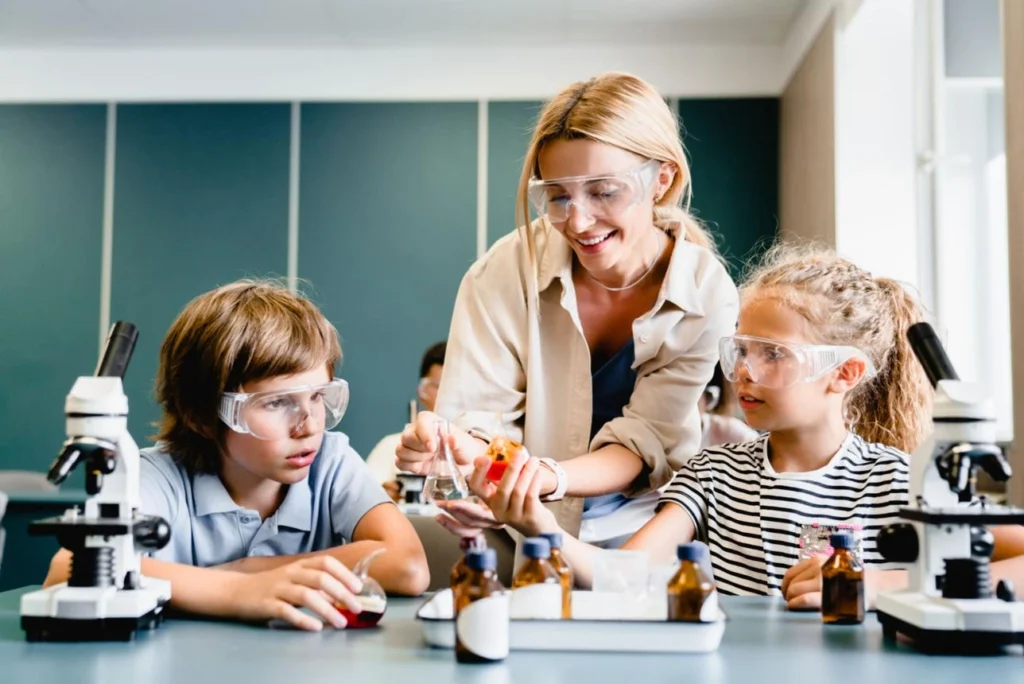
Teachers act as facilitators rather than simply delivering information. They encourage students to explore, ask questions, conduct investigations, and discuss their findings.
An effective science teacher:
- Demonstrates safe laboratory practices
- Encourages curiosity
- Guides investigations
- Promotes teamwork
- Connects science with real-life situations
- Inspires innovation
This supportive environment allows students to become confident learners.
STEM Learning and Innovation
Modern education increasingly integrates Science, Technology, Engineering, and Mathematics (STEM). Hands-on STEM activities encourage students to design, build, test, improve, and innovate.
Students may create bridges, robots, weather stations, water conservation models, coding projects, or simple machines, making learning exciting while preparing them for future careers in science and technology.
Why Parents Appreciate Hands-On Learning
Parents often notice positive changes when children participate in practical science education.
Children become more:
- Curious about nature
- Interested in asking meaningful questions
- Confident during presentations
- Independent learners
- Enthusiastic about school
- Motivated to explore scientific careers
Learning becomes an enjoyable experience rather than a routine academic task.
Hands-On Learning at DWPS Kalyani
At Delhi World Public School Kalyani, science education extends beyond textbooks. Our classrooms encourage students to explore, experiment, collaborate, and innovate through interactive activities, STEM projects, science exhibitions, laboratory sessions, and real-world applications.
By nurturing curiosity from an early age, we help students build strong scientific foundations while developing creativity, confidence, and critical thinking skills essential for the future.
Conclusion
Hands-On Learning in Science transforms education into an exciting journey of discovery. It helps students understand concepts deeply, improves academic performance, and develops practical life skills that extend beyond the classroom.
At DWPS Kalyani, our commitment to experiential learning ensures that every child has opportunities to explore science through observation, experimentation, and innovation. By encouraging curiosity and creativity, we prepare students to become confident learners and responsible global citizens.
Frequently Asked Questions
What is hands-on learning in science?
Hands-on learning allows students to understand scientific concepts through practical activities, experiments, and real-life observations instead of only reading textbooks.
Why is hands-on science important for children?
It improves conceptual understanding, problem-solving, creativity, confidence, and critical thinking while making learning enjoyable.
What age is suitable for hands-on science learning?
Children can begin simple practical science activities from the primary grades, with increasingly advanced experiments during middle school.
How does hands-on learning improve academic performance?
Students retain concepts better because they actively participate in the learning process, making lessons easier to understand and remember.
Does DWPS Kalyani encourage practical science learning?
Yes. DWPS Kalyani emphasizes experiential learning through laboratory activities, STEM education, science exhibitions, projects, and interactive classroom experiences.